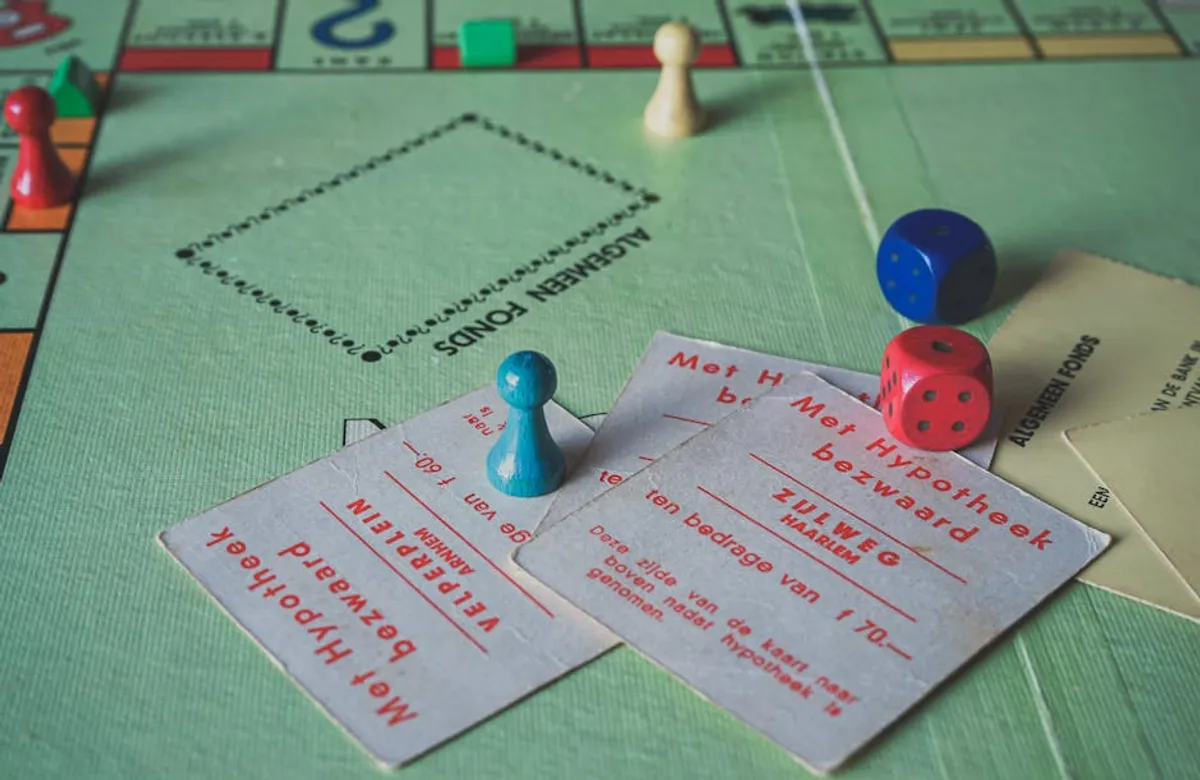
Game night success hinges on more than just understanding the rules; it often comes down to the strategic approach players employ. Whether the goal is competitive victory, collaborative achievement, or simply maximizing fun, a well-considered strategy can elevate the entire experience. This isn't about memorizing game-specific tactics, but rather adopting overarching philosophies that apply across diverse board game genres. From optimizing resource flows to mastering social dynamics, selecting the right strategic framework can clarify decisions, anticipate opponent moves, and ultimately shape the outcome of your game night.
Choosing Your Game Night Strategy
Selecting an effective board game strategy requires an assessment of several key factors before the first piece is moved. Consider the specific game being played: is it an engine-builder, a resource management title, a social deduction game, or a direct conflict simulation? Each genre favors different strategic inclinations. Player count also matters; a strategy focused on diplomacy might be potent in a four-player game but irrelevant in a two-player scenario. Evaluate the experience level of your fellow players; highly aggressive strategies might alienate new players, while overly cautious approaches could bore veterans. Finally, define the desired outcome for the evening. Is the primary goal a decisive win, fostering social interaction, or exploring the game's mechanics? Aligning your strategy with these variables ensures a more engaging and ultimately more satisfying game night for everyone involved.
1. The Engine Builder
This strategy centers on establishing self-sustaining systems that generate increasing returns over time. Players adopting this approach prioritize actions that improve their ability to take future actions, acquire resources, or score points more efficiently. Initial turns are often dedicated to acquiring foundational components—cards, workers, or income-generating assets—that, when combined, create a powerful synergy. The goal is to reach a tipping point where the engine operates with minimal input, allowing for rapid accumulation of victory points or overwhelming board presence in the mid to late game. This often means sacrificing early-game advantages or immediate scoring opportunities for long-term power.
Best For: Eurogames with complex economic systems, resource conversion mechanics, or cascading action bonuses. Ideal for players who enjoy planning several turns ahead and seeing their investments pay off geometrically.
Pros:
- Creates a strong, self-reinforcing advantage that can be difficult for opponents to counter once established.
- Rewards foresight and efficient sequencing of actions.
- Often leads to satisfying, high-scoring late games.
Cons:
- Can be slow to start, leaving players vulnerable to early aggression or allowing opponents to establish significant leads.
- Requires a deep understanding of game mechanics and potential synergies.
- Risks falling behind if foundational pieces are contested or unavailable.
Verdict: A powerful, often dominant strategy in games designed for it, but demands patience and a clear vision for the game's progression. Not suitable for games with very short playtimes or high early-game player elimination.
2. The Resource Maximizer
The Resource Maximizer focuses on optimizing the acquisition, storage, and conversion of game resources. This strategy emphasizes efficiency in resource generation, ensuring a steady supply of necessary components for building, trading, or activating abilities. Players will often prioritize actions that yield the highest resource-to-action ratio, or those that provide access to scarce or critical resources. Beyond acquisition, the strategy also involves efficient conversion—turning raw materials into finished goods, or basic resources into higher-value assets or victory points—with minimal waste. This approach seeks to ensure that a player never lacks the necessary components to execute their plans.
Best For: Games with prominent resource management, production chains, or commodity trading. Particularly effective in titles where resources are finite or highly contested.
Pros:
- Provides a stable foundation for other strategies by ensuring a constant supply of necessary components.
- Reduces reliance on luck or unpredictable draws for critical resources.
- Often leads to flexible play, as abundant resources can fund various tactical shifts.
Cons:
- Can become a "hoarding" strategy if not balanced with effective resource spending, leading to missed scoring opportunities.
- May neglect other victory conditions if too much focus is placed solely on resource accumulation.
- Vulnerable to resource denial tactics from opponents.
Verdict: A foundational strategy that underpins success in many economic and Euro-style games. Its effectiveness relies on understanding the value of each resource and the most efficient pathways for its use.
3. The Early Aggressor
This strategy aims to establish dominance or severely disrupt opponents' plans in the initial stages of a game. Players adopting the Early Aggressor approach often prioritize actions that yield immediate board presence, inflict early damage, or secure critical choke points. The goal is to gain an insurmountable lead before opponents can fully develop their own strategies, or to create such a disadvantage for them that recovery becomes difficult. This can involve rapid expansion, targeted attacks, or quickly claiming high-value areas or bonuses. Speed and direct confrontation are key elements of this strategy.
Best For: Conflict-heavy games, area control games, or games with player elimination mechanics. Suitable for players who enjoy direct confrontation and quick, decisive plays.
Pros:
- Can quickly establish a dominant position and dictate the pace of the game.
- Forces opponents to react defensively, potentially disrupting their long-term plans.
- Often leads to shorter game durations if successful.
Cons:
- Can overextend resources, leaving the player vulnerable if the initial push fails.
- May draw the collective ire of multiple opponents, leading to a united front against the aggressor.
- Less effective in games without direct conflict or with strong defensive options.
Verdict: A high-risk, high-reward strategy that, when executed precisely, can secure an early victory. However, it requires careful assessment of opponent capabilities and a readiness to adapt if the initial assault falters.
4. The Late-Game Powerhouse
In contrast to early aggression, the Late-Game Powerhouse strategy involves deliberately building towards a dominant final phase of the game. Players employing this approach accept slower initial progress, focusing on accumulating resources, developing powerful combinations, or positioning themselves for massive scoring opportunities in the closing turns. This might involve setting up complex scoring engines, acquiring high-value end-game bonuses, or simply accumulating a vast reserve of power that can be unleashed when it matters most. The strategy often requires weathering early pressure and resisting the temptation for immediate, but less impactful, gains.
Best For: Games with clear end-game scoring bonuses, exponential scoring mechanics, or those where early leads are easily overcome by late-game surges. Often seen in Eurogames and some economic simulations.
Pros:
- Can surprise opponents who focus too heavily on early or mid-game leads.
- Rewards strategic patience and efficient long-term planning.
- Often leads to satisfying, high-scoring finishes if the build-up is successful.
Cons:
- Risks falling too far behind if opponents secure an unassailable early lead.
- Vulnerable to game-ending conditions being met unexpectedly quickly.
- Requires a strong understanding of the game's scoring potential and how to maximize it in later rounds.
Verdict: A viable strategy that demands discipline and a clear vision for the game's conclusion. It can be devastatingly effective but requires careful monitoring of opponents' progress to ensure the late-game surge isn't too late.
5. The Opportunist
The Opportunist strategy is characterized by its flexibility and adaptability. Rather than adhering to a rigid pre-planned course, players employing this approach constantly monitor the board state, opponent actions, and emerging opportunities. They are quick to pivot their plans to exploit weaknesses, capitalize on unexpected resource availability, or take advantage of neglected scoring paths. This strategy is less about building a specific engine or pursuing a single victory condition and more about reacting effectively to the dynamic flow of the game. It demands strong tactical awareness and the ability to make efficient decisions in the moment.
Best For: Games with high player interaction, variable setups, or significant elements of luck (e.g., card draws, dice rolls). Ideal for players who enjoy dynamic play and quick tactical adjustments.
Pros:
- Highly adaptable to changing game states and opponent strategies.
- Can capitalize on opponents' mistakes or overlooked opportunities.
- Often leads to unexpected and creative plays.
Cons:
- Can lack a cohesive long-term plan, potentially leading to inefficient turns if no clear opportunity arises.
- May struggle against opponents with very focused, well-executed strategies.
- Requires excellent tactical awareness and quick decision-making under pressure.
Verdict: A powerful strategy for players who can read the game state accurately and react swiftly. It thrives in dynamic environments but can falter if a player becomes too reactive without an underlying strategic goal.
6. The Diplomat/Negotiator
This strategy centers on social interaction, forming alliances, making trades, and influencing other players through verbal persuasion. The Diplomat seeks to gain advantages not just through game mechanics, but through interpersonal relationships at the table. This can involve proposing mutually beneficial trades, offering protection from a common threat, or subtly manipulating opponents against each other. The goal is to create situations where other players' actions inadvertently benefit the Diplomat, or to secure resources and agreements that would be impossible through direct game actions alone. Trust, reputation, and persuasive communication are critical tools.
Best For: Games with explicit negotiation mechanics, player interaction, or potential for temporary alliances. Especially effective in "Ameritrash" style games or those with a strong social element.
Pros:
- Can secure resources or protection that cannot be gained through mechanical actions.
- Adds a rich social layer to the game, enhancing the overall experience.
- Allows for creative problem-solving and can turn seemingly losing positions around.
Cons:
- Success is highly dependent on the personalities and willingness of other players to engage.
- Can lead to resentment or targeted play if perceived as overly manipulative.
- Less effective in games with minimal player interaction or strict rule sets.
Verdict: A highly engaging strategy that, when mastered, can turn social dynamics into a powerful game asset. It requires strong communication skills and a good read of the table's interpersonal landscape.
7. The Bluff Master
The Bluff Master strategy relies on deception, misdirection, and the exploitation of hidden information. Players employing this approach aim to mislead opponents about their true intentions, hand composition, or secret objectives. This can involve making plays that seem suboptimal but hide a deeper purpose, feigning weakness to draw out an opponent, or simply making bold claims that may or may not be true. The core idea is to influence opponents' decisions by presenting a false narrative or by making them second-guess their own assessments. Psychological warfare is a key component.
Best For: Social deduction games, card games with hidden hands, or any game where information is not fully public. Ideal for players who enjoy psychological aspects and reading opponents.
Pros:
- Can gain significant advantages by causing opponents to make suboptimal moves based on false information.
- Adds a layer of psychological depth and excitement to the game.
- Allows for unexpected victories by executing a hidden agenda.
Cons:
- Requires a good poker face and the ability to maintain a consistent facade.
- Can backfire spectacularly if bluffs are called or intentions are revealed prematurely.
- Less effective in games with fully public information or minimal player interaction.
Verdict: A thrilling strategy that can be incredibly potent in the right game and with the right opponents. It demands confidence, careful observation, and a willingness to take calculated risks.
8. The Risk Assessor
This strategy involves systematically evaluating probabilities, potential outcomes, and the risk-reward ratio of various actions. The Risk Assessor makes decisions based on calculated odds, aiming to maximize favorable outcomes and minimize potential negative consequences. This might involve choosing the action with the highest statistical chance of success, mitigating risks through defensive plays, or only taking gambles when the potential reward significantly outweighs the risk of failure. This approach often involves careful analysis of the game state, understanding the distribution of cards or dice outcomes, and making choices that improve long-term statistical success rather than relying on single, high-variance plays.
Best For: Games with significant elements of chance (dice, card draws), resource allocation decisions, or combat systems with variable outcomes. Suited for analytical players who enjoy probability and optimization.
Pros:
- Leads to more consistent performance over multiple games by reducing reliance on pure luck.
- Minimizes catastrophic failures by avoiding overly risky plays.
- Empowers players to make informed decisions even in uncertain situations.
Cons:
- Can lead to overly cautious play, potentially missing out on high-reward, moderate-risk opportunities.
- May be slower and less exciting than more aggressive or opportunistic strategies.
- Requires a good understanding of the game's probabilistic elements.
Verdict: A robust and reliable strategy that builds a foundation for consistent performance. While it may not always lead to the flashiest wins, it often leads to fewer losses by consistently making statistically sound decisions.
9. The Victory Point Hunter
The Victory Point Hunter strategy is straightforward: identify the most efficient paths to scoring victory points (VPs) and pursue them relentlessly. This often means ignoring secondary objectives, minor advantages, or even direct confrontation if those actions do not directly contribute to VP accumulation. Players using this strategy will analyze the game's scoring conditions, prioritize actions that yield the highest VP-per-action ratio, and focus on completing objectives that provide substantial end-game bonuses. The emphasis is purely on the final score, often to the exclusion of other board state considerations.
Best For: Eurogames with multiple clear scoring paths, games with hidden objectives, or titles where VPs are the sole determinant of victory. Ideal for players who prioritize efficiency and direct objective completion.
Pros:
- Provides a clear, focused objective throughout the game.
- Can be very efficient if the chosen VP paths are not heavily contested.
- Often leads to high scores in games designed around this type of optimization.
Cons:
- Can be vulnerable to opponents who disrupt chosen scoring paths or claim critical VP sources.
- May neglect board presence or defensive measures, leaving the player vulnerable to other strategies.
- Can sometimes feel less interactive if the focus is solely on personal scoring.
Verdict: A highly effective and direct strategy for many modern board games. Its success hinges on accurately identifying the most efficient scoring opportunities and executing them without major interference.
10. The Player Eliminator
This strategy involves focusing efforts on removing one or more opponents from the game, or severely crippling their ability to compete. The Player Eliminator often identifies a perceived threat or a weak link and directs all available resources and actions towards neutralizing that player. This can involve direct attacks, resource denial, or targeting their key assets. The goal is to reduce the number of active competitors, thereby increasing the Eliminator's own chances of victory, or to remove a specific obstacle to their own strategy. This is a highly confrontational approach.
Best For: Games with direct conflict, player elimination mechanics, or those where reducing opponent count significantly simplifies the game state. Often seen in war games or certain "take that" style games.
Pros:
- Can simplify the game state by reducing the number of active threats.
- Removes a direct competitor, increasing the Eliminator's relative strength.
- Can be a powerful deterrent against other players.
Cons:
- Often draws the collective aggression of other players, who may unite against the Eliminator.
- Can be resource-intensive, diverting resources from personal scoring or development.
- May lead to a less enjoyable experience for the eliminated player.
Verdict: A decisive and often brutal strategy that can be highly effective but carries significant social and in-game risks. It requires careful target selection and the ability to withstand potential backlash.
11. The Set Collector/Combiner
The Set Collector/Combiner strategy focuses on acquiring specific groups of items, cards, or tokens that, when assembled, yield significant bonuses or victory points. This involves prioritizing actions that allow for efficient drafting, trading, or claiming of these components. Beyond simple collection, the "Combiner" aspect emphasizes finding powerful synergies between different collected items, where the sum is greater than its parts. Players using this strategy will often track what components are available, what opponents are collecting, and which combinations offer the highest returns for their investment. This approach requires careful planning and often a good memory for available pieces.
Best For: Games with card drafting, tableau building, or explicit set collection mechanics. Common in many card-driven Eurogames and some economic games.
Pros:
- Provides a clear, structured path to scoring and power accumulation.
- Rewards efficient planning and strategic acquisition of key components.
- Can lead to powerful, synergistic turns when sets or combinations are completed.
Cons:
- Can be highly competitive, as multiple players may vie for the same sets or components.
- Vulnerable to "hate drafting" where opponents take needed pieces simply to deny them.
- May require adaptation if critical pieces are unavailable or too costly.
Verdict: A reliable strategy in games designed with these mechanics. Success depends on understanding the value of different sets and combinations, and effectively navigating competition for key components.
12. The Information Gatherer
This strategy prioritizes acquiring knowledge about the game state, opponents' hands, hidden objectives, or future events. The Information Gatherer dedicates actions or resources to scouting, spying, drawing extra cards, or gaining insight into unseen elements of the game. The goal is to make more informed decisions by reducing uncertainty, anticipating opponent moves, and revealing hidden opportunities or threats. This strategy is less about direct scoring and more about building a knowledge advantage that can then be leveraged into more effective tactical or strategic plays. It's about playing with an open book, even if that book is only partially revealed.
Best For: Games with hidden information, fog-of-war mechanics, or complex decision trees where knowing opponent intentions is crucial. Especially useful in strategic war games or games with secret objectives.
Pros:
- Enables more accurate decision-making and reduces reliance on guesswork.
- Can reveal critical vulnerabilities in opponents' plans or uncover lucrative scoring opportunities.
- Provides a psychological edge by demonstrating awareness of the broader game state.
Cons:
- Actions dedicated to information gathering may not directly contribute to scoring or board presence.
- The information gained may not always be useful or actionable.
- Can be a slow strategy, potentially allowing opponents to establish leads while information is being collected.
Verdict: A powerful supporting strategy that enhances the effectiveness of almost any other approach. While not a direct path to victory, it provides the clarity needed to execute other strategies with greater precision and impact.
Implementing and Adapting Strategies for Game Night
Successfully applying these board game strategies during game night involves more than just selecting one from the list; it requires dynamic implementation and adaptation. Before starting, quickly assess the game's core mechanics and the general preferences of your group. If it's a new game, a more flexible, opportunistic strategy might be safer than a rigid engine build. As the game progresses, continuously monitor the board state, opponent actions, and your own resource levels. A strategy that seemed optimal at the outset might need adjustment if a key resource is blocked, an opponent makes an unexpected move, or a new scoring opportunity emerges. Be prepared to pivot; a Player Eliminator might realize their target is too strong and switch to a Victory Point Hunter approach. Learning from each game is crucial. Reflect on what worked, what didn't, and how your chosen strategy interacted with the game's rules and your opponents' playstyles. This iterative process of selection, implementation, and adaptation refines your strategic acumen, leading to more engaging and successful game nights over time.
Frequently Asked Questions About Board Game Strategies
Can I combine different strategies in a single game?
Yes, combining strategies is often the mark of an advanced player. For instance, an Engine Builder might also employ Risk Assessment to ensure their engine components are secured, or an Opportunist might use Bluffing to create an opening. The key is to ensure the combined strategies are complementary and do not conflict in their immediate goals or resource demands.
How do I choose the best strategy for a game I've never played before?
For a new game, start by understanding its core victory conditions and resource systems. A flexible strategy like The Opportunist or a foundational one like The Resource Maximizer can be good starting points. Pay close attention to how other players approach the game and be prepared to adapt quickly. Reading the rulebook's strategy tips, if available, can also provide initial guidance.
What if my chosen strategy isn't working during the game?
If your strategy isn't yielding results, it's crucial to identify why. Is it due to opponent counter-play, bad luck, or a misjudgment of the game's mechanics? Once you understand the issue, adapt. This might mean shifting to a different strategy entirely, or simply making tactical adjustments within your current framework. For example, a stalled Engine Builder might pivot to a more direct Victory Point Hunter approach using whatever resources they've already accumulated.
Is there a "best" strategy for all board games?
No