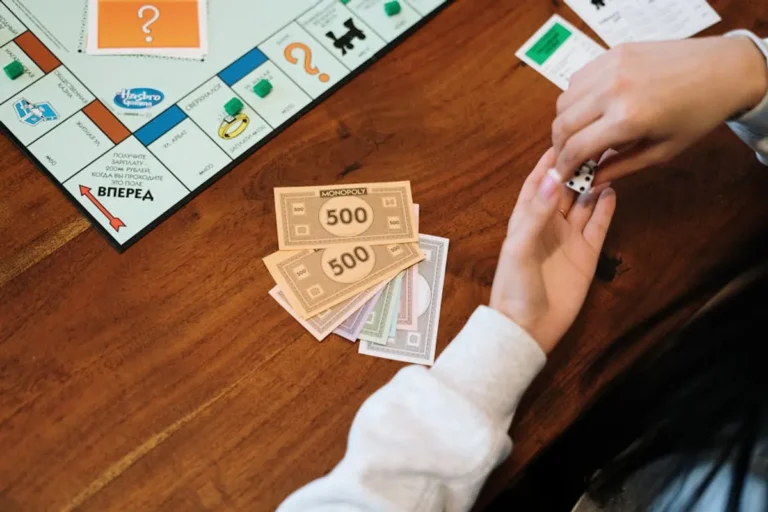
For casual players seeking engaging tabletop experiences, the landscape of dice and card games offers a diverse array of options that prioritize accessibility, social interaction, and replayability over complex rules or extensive setup. The core appeal lies in their low barrier to entry: games that can be taught in minutes, played in under an hour, and enjoyed by groups with varying levels of gaming experience. This selection focuses on titles that deliver immediate fun, foster lighthearted competition or cooperation, and serve as excellent catalysts for social gatherings, ensuring that the focus remains on shared enjoyment rather than intricate strategy or deep commitment.
How to Choose the Right Casual Game
Selecting a casual game involves considering several practical factors to ensure it aligns with your group's preferences and the occasion. Prioritizing these elements will help identify games that consistently deliver enjoyable experiences without unnecessary friction.
- Learning Curve: Opt for games where the core rules can be explained and understood within 5 to 10 minutes. This minimizes downtime and allows players to engage quickly without feeling overwhelmed. Look for intuitive mechanics and clear objectives.
- Player Count Flexibility: Many casual games excel because they accommodate a wide range of player numbers, often scaling smoothly from 2 to 6+ participants. This versatility ensures the game remains viable whether you have a small gathering or a larger party.
- Game Length: Ideal casual games typically conclude within 15 to 45 minutes. Shorter playtimes allow for multiple rounds, easy integration into social events, and a low commitment level, making it simple to start and finish a game without disrupting other activities.
- Interaction Level: Consider the type of interaction your group prefers. Some games feature direct competition and "take-that" mechanics, while others promote cooperation, social deduction, or simply parallel play. Matching the interaction style to your group's dynamic enhances enjoyment.
- Theme and Art: While not strictly mechanical, an appealing theme and clear, engaging artwork can significantly enhance a game's accessibility and overall experience for casual players. Themes that are light, humorous, or universally understood tend to be more inviting.
- Portability and Setup: Games with minimal components and quick setup times are often favored by casual players. Ease of transport and a rapid transition from box to play surface contribute to spontaneous gaming opportunities.
1. Uno
Uno stands as a foundational card game, renowned for its straightforward color and number matching mechanics. Players aim to be the first to empty their hand by playing cards that match the top card of the discard pile by color or number. The inclusion of special action cards—Skip, Reverse, Draw Two, Wild, and Wild Draw Four—introduces immediate shifts in gameplay, creating unpredictable turns and direct player interaction. Its universal recognition and simple objective make it an instant choice for diverse groups seeking quick, competitive fun.
Best for: Large, mixed-age groups and family gatherings where immediate understanding and rapid play are priorities.
Pros:
- Universal Recognition: Most players are already familiar with the rules, eliminating the need for extensive teaching.
- Quick Rounds: Games can conclude in minutes, allowing for multiple replays and flexible session lengths.
- High Interaction: Action cards directly impact other players, keeping everyone engaged and often leading to humorous moments.
- Portable: A standard deck is small and easy to transport, suitable for travel or impromptu play.
Cons:
- Repetitive Play: The core mechanic can become predictable over many sessions without variations.
- "Take That" Focus: The direct negative interaction of Draw Two and Wild Draw Four cards can be divisive for players who prefer less confrontational games.
- Luck-Dependent: Success often hinges on the draw of cards rather than strategic depth.
Verdict: Uno remains a reliable choice for instant, competitive card game action, particularly effective for breaking the ice or filling short time slots with its accessible rules and direct engagement.
2. Sushi Go!
Sushi Go! is a fast-paced card-drafting game where players collect sets of sushi dishes to score points. Each round, players are dealt a hand of cards, select one to keep, and pass the rest to their neighbor. This simultaneous selection process keeps all players involved and minimizes downtime. The goal is to strategically collect combinations like nigiri, maki rolls, and dumplings, while also aiming for puddings to score at the end of the game. Its charming artwork and simple set-collection goals make it an approachable entry point into drafting mechanics.
Best for: Groups up to five players looking for a quick, light strategy game with adorable aesthetics and simultaneous play.
Pros:
- Easy to Learn: Rules are explained in under five minutes, making it highly accessible for new players.
- Simultaneous Play: All players choose cards at the same time, maintaining engagement and speeding up rounds.
- Charming Artwork: The cute sushi illustrations enhance the game's appeal.
- Quick Playtime: A full game typically lasts 15-20 minutes, ideal for multiple rounds or as a filler.
Cons:
- Limited Player Count: The base game supports only 2-5 players, which can be restrictive for larger gatherings.
- Strategic Depth: While engaging, experienced players might find the strategic options somewhat limited over time.
- Minimal Direct Interaction: Interaction is primarily indirect through drafting, rather than direct "take-that" actions.
Verdict: Sushi Go! excels as an introductory card-drafting game, offering satisfying set collection and quick, engaging rounds that appeal to a broad audience with its delightful presentation.
3. Exploding Kittens
Exploding Kittens is a highly popular, humor-driven card game that combines elements of Russian roulette with strategic card play. Players draw cards until someone draws an Exploding Kitten, at which point they are out of the game unless they have a Defuse card. The deck also contains various action cards that allow players to skip turns, attack others, peek at the deck, or shuffle it, creating opportunities to manipulate fate and avoid explosive outcomes. Its irreverent tone and simple, direct mechanics contribute to its appeal as a lighthearted party game.
Best for: Groups who appreciate humor, direct player interaction, and highly luck-driven gameplay for quick, silly sessions.
Pros:
- Simple Rules: The core concept is easy to grasp, allowing new players to jump in quickly.
- High Humor: The card art and overall theme are designed for laughs and lighthearted fun.
- Quick Setup: Minimal components mean the game can be ready to play in moments.
- Direct Interaction: Many cards directly affect other players, fostering competitive and often chaotic moments.
Cons:
- High Luck Factor: Drawing the wrong card can end a player's game regardless of strategy.
- "Take That" Emphasis: The game heavily features cards that directly hinder opponents, which some players may find frustrating.
- Limited Strategic Depth: While there are tactical decisions, long-term strategy is secondary to short-term reactions.
Verdict: Exploding Kittens delivers on its promise of quick, humorous, and highly interactive card play, making it a solid choice for casual gatherings where laughter and unpredictability are valued over deep strategic planning.
4. Codenames
Codenames is a team-based word association game where two rival spymasters give one-word clues that can point to multiple words on the table. Their teammates then try to guess their team's words while avoiding the opponent's words and, critically, the assassin word. The game challenges players to think creatively about word connections and communication, balancing the desire to give powerful multi-word clues with the risk of misdirection. Its accessible concept belies a surprising depth of intellectual engagement, making it a staple for groups who enjoy linguistic puzzles.
Best for: Groups of four or more players who enjoy word games, deduction, and cooperative puzzle-solving within a competitive framework.
Pros:
- Highly Engaging: The core mechanic of giving and interpreting clues keeps all players actively involved.
- Promotes Creative Thinking: Spymasters must find clever connections, and guessers must deduce their intent.
- Scalable Difficulty: The challenge naturally adjusts to the players' skill in word association.
- High Replayability: With hundreds of word cards, each game presents a unique puzzle.
Cons:
- Minimum Player Count: Requires at least four players (two per team) to function optimally.
- Analysis Paralysis: Spymasters can sometimes take a long time to formulate clues, leading to downtime.
- Language Dependent: Requires a shared understanding of nuanced word meanings.
Verdict: Codenames is a standout party game that successfully blends intellectual challenge with accessible rules, providing a highly engaging and rewarding experience for groups that appreciate clever wordplay and team dynamics.
5. Ticket to Ride
Ticket to Ride is a popular board game that uses a core card-collecting mechanic to facilitate route building. Players collect sets of colored train car cards to claim railway routes connecting cities across a map. Completing routes allows them to fulfill destination tickets, which are secret objectives that award points. The game balances simple set collection with strategic route planning and a subtle element of blocking opponents. While it involves a board, the primary action of collecting and playing cards for routes keeps it firmly within the card-driven casual category.
Best for: Families and newer players interested in an accessible gateway board game that emphasizes card collection and spatial strategy.
Pros:
- Elegant Rules: The core mechanics are simple to grasp, making it easy to teach and learn.
- Satisfying Goal Completion: Claiming routes and completing tickets provides a clear sense of accomplishment.
- Multiple Versions: Various maps and expansions offer diverse gameplay experiences and settings.
- Strategic Depth: Offers enough strategic choices to remain engaging without being overwhelming.
Cons:
- Longer Playtime: A full game typically lasts 30-60 minutes, longer than pure card or dice games.
- Can Feel Abstract: The theme is light, and the gameplay is primarily focused on abstract route building.
- Limited Direct Interaction: Interaction is mostly indirect through route blocking, rather than direct player attacks.
Verdict: Ticket to Ride excels as a gateway game, providing a smooth introduction to modern board gaming through its intuitive card-based route building and appealing presentation, suitable for a wide range of players.
6. King of Tokyo
King of Tokyo is a dice-rolling game where players take on the roles of giant monsters battling for control of Tokyo. On their turn, players roll six custom dice, re-rolling up to two times, to determine their actions: attacking other monsters, gaining energy cubes (for purchasing power-up cards), healing, or scoring victory points. The game combines satisfying dice-chucking with direct conflict and a push-your-luck element, as players decide whether to enter Tokyo for bonus points and increased vulnerability. Power-up cards add unique abilities and strategic layers to the monster mayhem.
Best for: Energetic groups who enjoy direct conflict, exciting dice rolls, and a monster movie theme for competitive, quick-paced sessions.
Pros:
- Exciting Dice Rolls: The core mechanic of rolling and re-rolling dice is inherently engaging and creates suspense.
- Satisfying Theme: Playing as giant monsters destroying Tokyo is a universally appealing concept.
- Quick Setup & Playtime: Games are typically 30 minutes, allowing for multiple rounds.
- Direct Conflict: Players directly attack each other, fostering competitive interaction.
Cons:
- High Luck Dependence: Dice rolls can heavily influence outcomes, sometimes overshadowing strategic decisions.
- Direct Conflict: The "attack other players" aspect may not appeal to groups preferring purely cooperative or indirect games.
- Power-up Imbalance: Some power-up cards can feel significantly stronger than others, leading to swings in momentum.
Verdict: King of Tokyo delivers a high-energy dice-rolling experience that is both simple to learn and provides ample opportunities for monster-themed destruction and competitive fun, making it a solid choice for lively groups.
7. Yahtzee
Yahtzee is a classic dice game centered on rolling five dice to achieve specific combinations, similar to poker hands, to score points. Players get three rolls per turn to try and complete categories like "three of a kind," "full house," or the highly sought-after "Yahtzee" (five of a kind). The challenge lies in deciding which dice to keep and which to re-roll, and strategically choosing which category to score in, as each category can only be used once. Its enduring appeal comes from its blend of luck, simple decision-making, and competitive scoring.
Best for: Nostalgia, simple competitive scoring, and groups seeking a universally recognized dice game that is easy to pick up.
Pros:
- Universally Known: Most players are familiar with the rules, requiring minimal explanation.
- Portable: Only requires five dice and a score pad, making it highly travel-friendly.
- Quick to Play: Individual turns are fast, and a full game can be completed in 20-30 minutes.
- Simple Goal: The objective of scoring points through dice combinations is clear and direct.
Cons:
- Pure Luck: Success is heavily reliant on fortunate dice rolls, potentially leading to frustration.
- Can Feel Dated: Compared to modern dice games, its mechanics can feel less innovative or engaging for some.
- Limited Interaction: Gameplay is largely individual, with little direct interaction between players.
Verdict: Yahtzee remains a timeless dice game, offering straightforward competitive rolling and a comforting familiarity that makes it an accessible choice for casual play, particularly for those who appreciate classic gaming experiences.
8. Qwixx
Qwixx is a fast-paced, roll-and-write dice game where all players are actively engaged on every turn. Two white dice and four colored dice are rolled. The sum of the two white dice can be marked off by all players in any of their four colored rows. The active player can also use one white die plus one colored die to mark off a number in the corresponding colored row. The goal is to mark off as many numbers as possible in each row, aiming to "lock" rows by marking the final number, which also allows players to score more points. Its simultaneous play and push-your-luck elements create constant engagement.
Best for: Quick, simultaneous play, groups seeking light strategy with luck, and highly engaging rounds where everyone is involved.
Pros:
- Simultaneous Play: All players can react to every dice roll, eliminating downtime.
- Quick Rounds: Games typically last 15-20 minutes, perfect for multiple plays.
- Addictive Gameplay: The push-your-luck element and satisfying mark-offs create a compelling loop.
- Easy to Learn: Rules are simple, focusing on number recognition and basic arithmetic.
Cons:
- Limited Direct Interaction: While players react to shared dice, there's little direct interference with opponents' boards.
- Can Feel Like Solitaire: The individual scoring sheets can make the experience feel somewhat solitary despite shared dice.
- Requires Score Sheets: Repeated play necessitates a supply of score sheets, or laminating them for reuse.
Verdict: Qwixx stands out as an excellent roll-and-write game that keeps all players constantly engaged